HEAT TRANSFER: CONDUCTION, CONVECTION, RADIATION
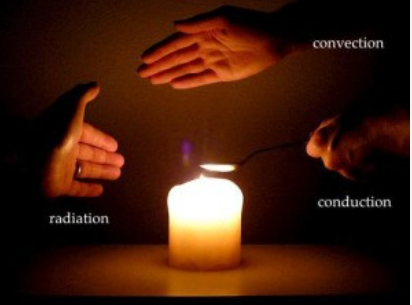
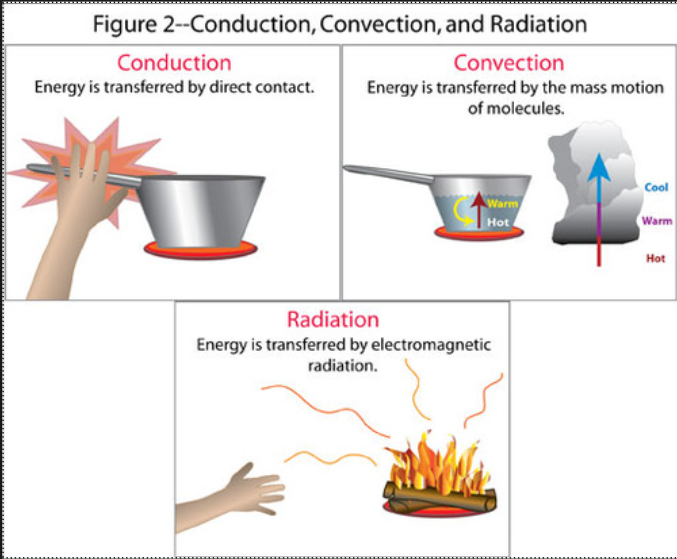
There are three main ways that you can get heat from something else: conduction, convection, and radiation.
Conduction
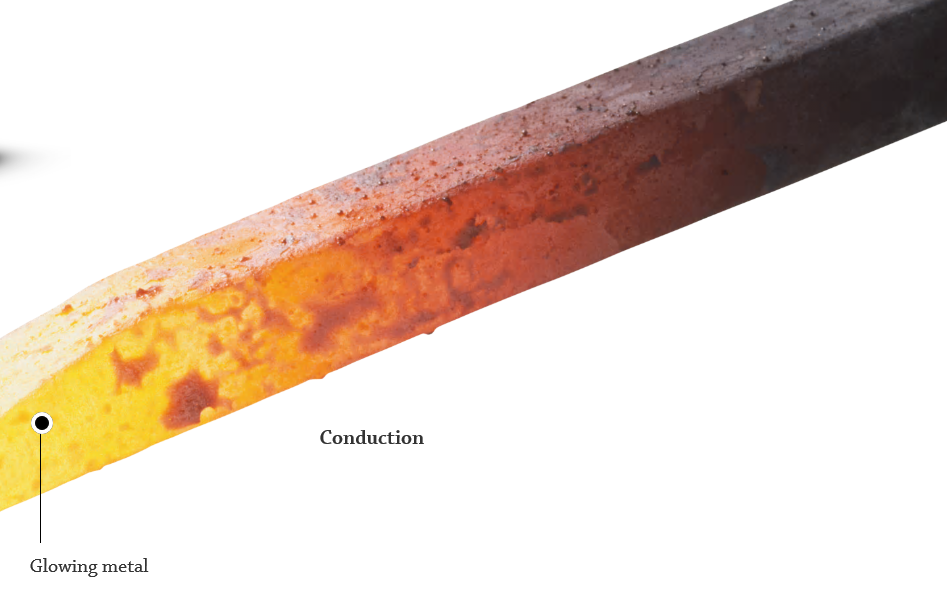
Heat spreads through solids by a process called conduction. As atoms and molecules, the tiny particles that make up all matter, become hot, they jiggle around a lot. These jiggling particles then knock into cooler particles and make them jiggle faster, passing on the heat energy. When one end of this metal bar is heated, heat moves from the hot end to the rest of the bar.
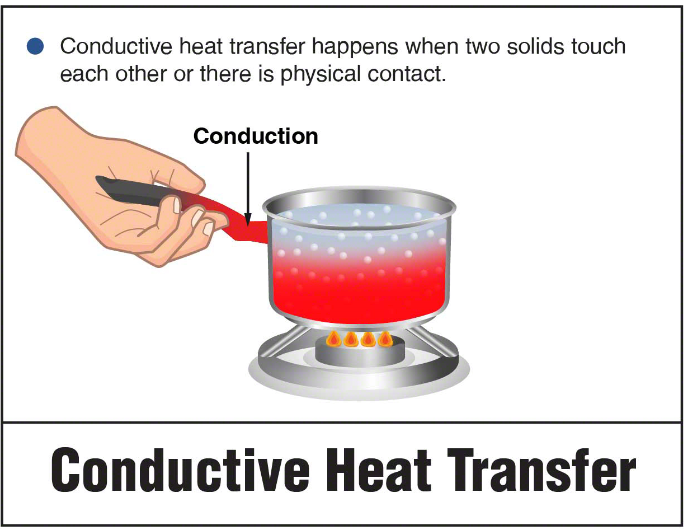
Put a metal spoon in a pot on the stove, and the handle gets hot. This is conduction – the handing-off of heat through a material. This happens when the molecules in one part of the substance jiggle faster as they heat up. Then they transfer this heat energy to their neighbors and so on down the line in a sort of “telephone” game. Some materials conduct heat well, like that metal spoon. If you leave a wooden spoon in a pot of soup, the handle doesn’t get hot. Materials that don’t conduct heat well are called insulators. What are some other insulators? Ceramic, wood, plastic foam, wool, and air are all good insulators.
Convection
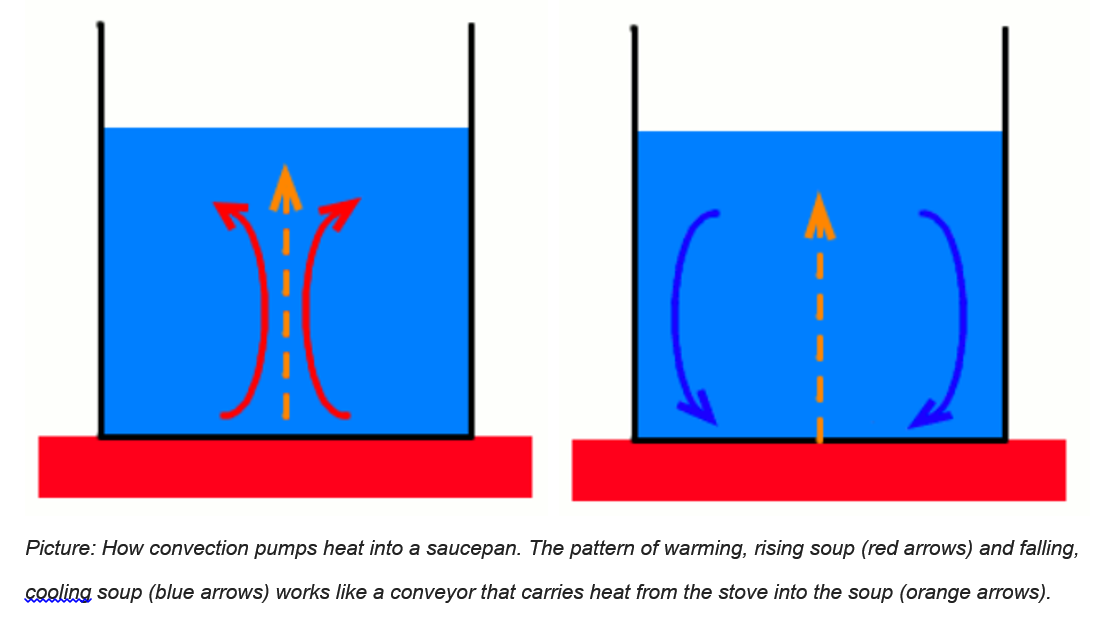
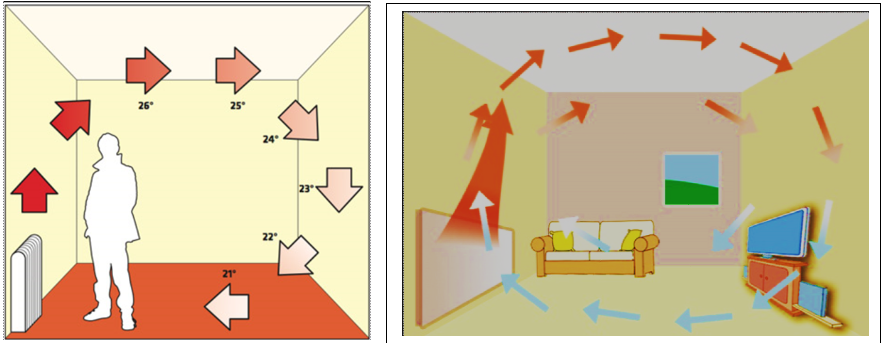
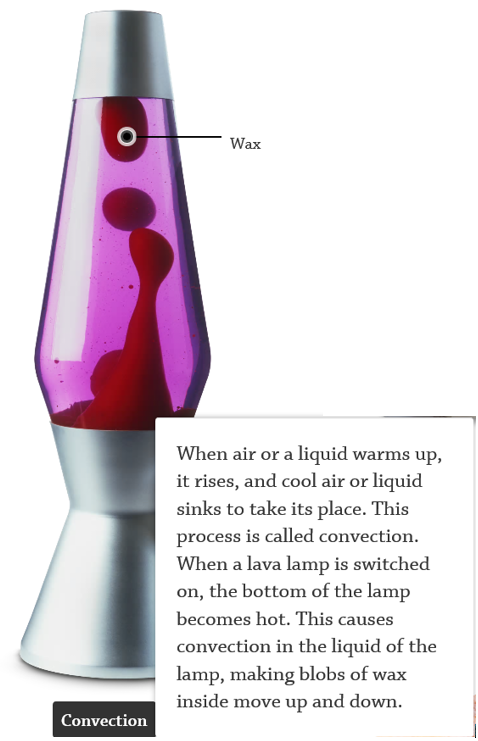
Convection is the main way heat flows through liquids and gases. Put a pan of cold, liquid soup on your stove and switch on the heat. The soup in the bottom of the pan, closest to the heat, warms up quickly and becomes less dense (lighter) than the cold soup above. The warmer soup rises upward and colder soup up above it falls down to take its place. Pretty soon you’ve got a circulation of heat running through the pan, a bit like an invisible heat conveyor, with warming, rising soup and cooling, falling soup. Gradually, the whole pan heats up. Convection is also one of the ways our homes heat up when we turn on the heating. Air warms up above the heaters and rises into the air, pushing cold air down from the ceiling. Before long, there’s a circulation going on that gradually warms up the entire room.
A wood stove warms the air around it, but it doesn’t warm the whole house until you turn on a fan to circulate that warm air. Convection is part of the reason that wind makes you cold – heat flows away from your body more rapidly in a wind. Remember, you don’t “get” cold from the wind, you just lose heat.
Heat – A simple introduction to the science of heat energy
Radiation
Heat – A simple introduction to the science of heat energy
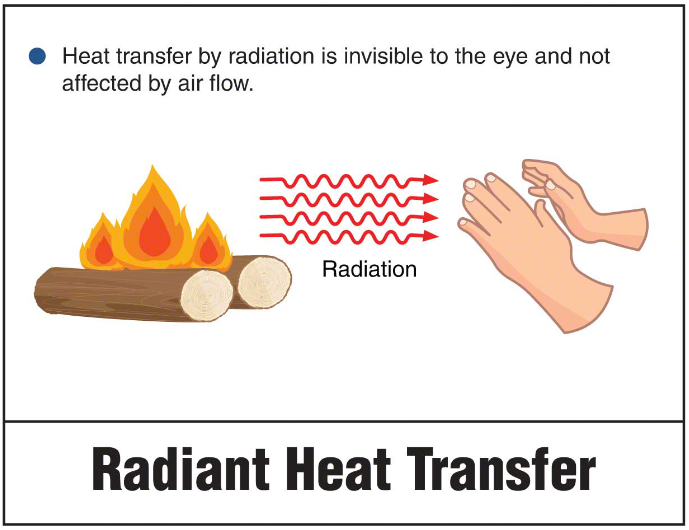
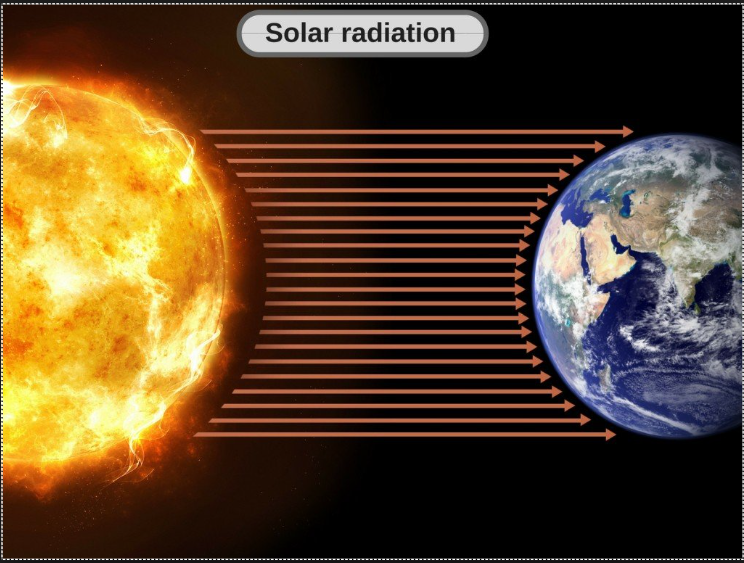
Radiation is the third major way in which heat travels. Conduction carries heat through solids; convection carries heat through liquids and gases; but radiation can carry heat through empty space—even through a vacuum. We know that much simply because we’re alive: almost everything we do on Earth is powered by solar radiation beamed toward our planet from the Sun through the howling empty darkness of space. But there’s plenty of heat radiation on Earth too. Sit near a crackling log fire and you’ll feel heat radiating outward and burning your cheeks. You’re not in contact with the fire, so the heat’s not coming to you by conduction and, if you’re outside, convection probably isn’t carrying much toward you either. Instead, all the heat you feel travels by radiation—in straight lines, at the speed of light—carried by a type of electromagnetism called infrared radiation. A car heating up on a sunny day is another example of heat energy transferring from the sun to the care via radiation.
 Year 3 Science Unit 3: How does heat behave?